

The PS5 DualSense controller is the next leap forward in technology, comparable to the invention of thumbsticks, rumble, and virtual reality.
Platform: PS5 | Manufacturer: Sony | Release Date: 12th November 2020
Sony has created something rather magnificent, catching competitors off-guard. While rival companies focus on games libraries and gimmicks, PlayStation has revolutionised the way we play and immerse ourselves in video games. The DualSense will be the standard by which all modern controllers deride. Xbox and Nintendo, will be watching on, wondering how to compete, and for now, they will tempt players through game subscriptions, and in the case of Nintendo on the go, local multiplayer and unique first-party titles that never have direct competition, such as the Mario and Zelda series.
But Sony, have an ace in their hand with the much-heralded haptic feedback controller, which sets them apart from everyone else. Players feel the game in their hands. Rather than merely controlling characters, and objects on screen, they can be felt. The impact and tension transponds through the controls with resistance, and vibrations depending on the area causing friction in a game. For instance, with racing cars, when traction is heavily favouring the left-hand side of the car, only that side of the controller will vibrate. Wheel spins and throttle management are felt through the corresponding triggers.
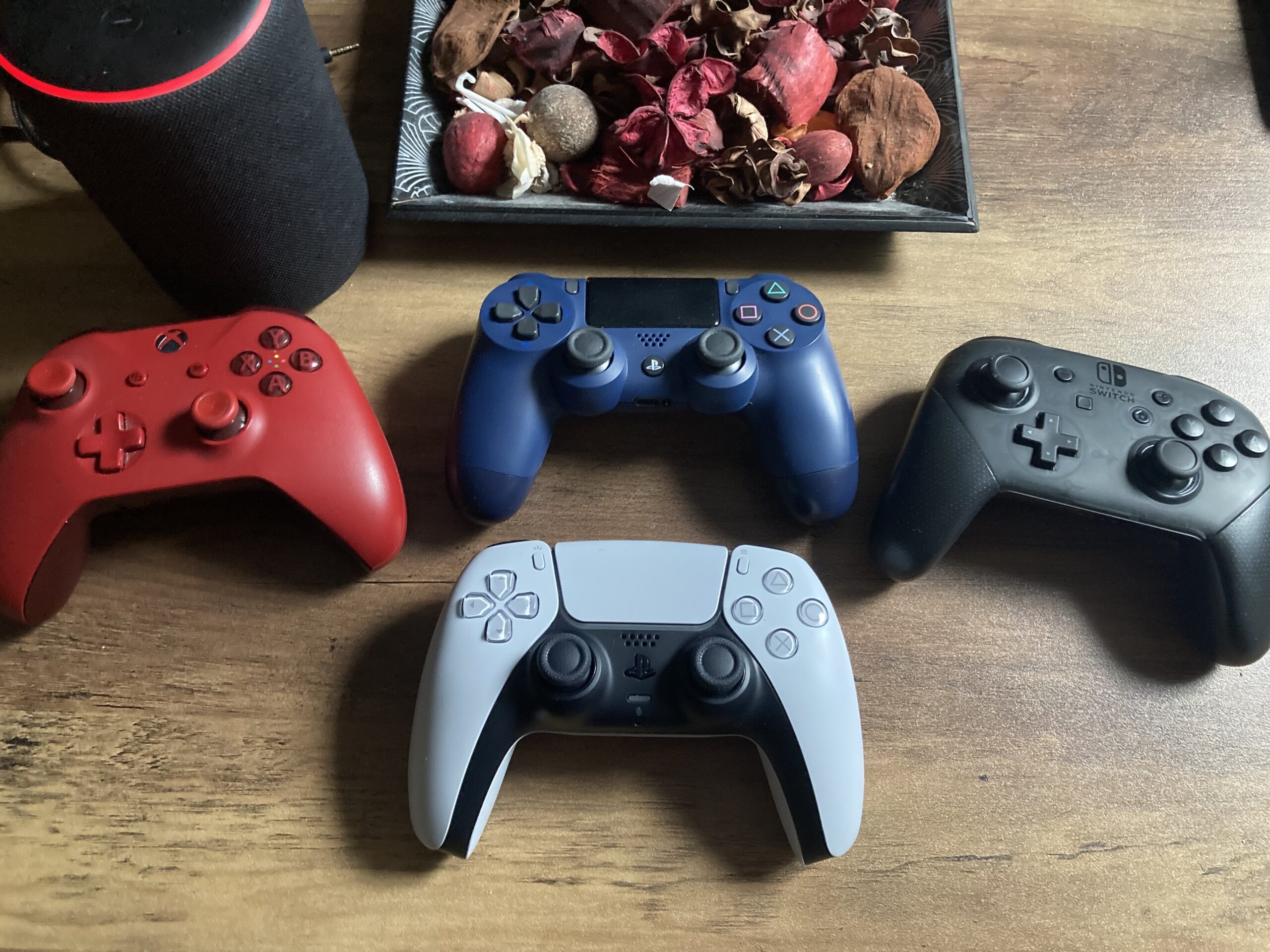
In the case of Horizon: Forbidden West, Alloy’s bow is felt through the left trigger as she pulls back, with resistance, and the same can be said for shooting in Call of Duty. It’s a new level of immersion we never knew we needed. Who would’ve thought of such a thing? Sony did, and there’s no going back to traditional controllers, at least for me.
On the face of it, the PlayStation 5’s DualSense controller doesn’t look any different to other controllers, and nothing remarkable, but only through holding it in your hands, and experiencing can you truly appreciate how remarkable it is. Size-wise, it’s slightly wider than the PS4’s DualShock 4 controller, and while for those with smaller hands, it may feel uncomfortable, for me it’s perfect. As PlayStation controllers always favour positioning thumbsticks in the centre of the controller, my thumbs used to ache and hurt during extended play sessions on the PS4 console. As the PS5’s DualSense controller is wider, my thumbs don’t feel unnaturally pushed in. It’s a comfortable size, and a more natural experience compared to its predecessor.
Battery life is generous, and as with previous PlayStation controllers, it’s wireless, with an internal battery which is charged either through a USB cable or a docking station. At the top of the controller is a USB-C port, so it can be charged by connecting to the USB ports on the PS5 console. At the bottom of the controller is a 3.5mm headphone port, and also connectors for charging on a separately sold docking station. It’s nice to have options, and Sony has gone above and beyond. In comparison, Xbox controllers rely on users inserting their own batteries and have no charging or docking feature.
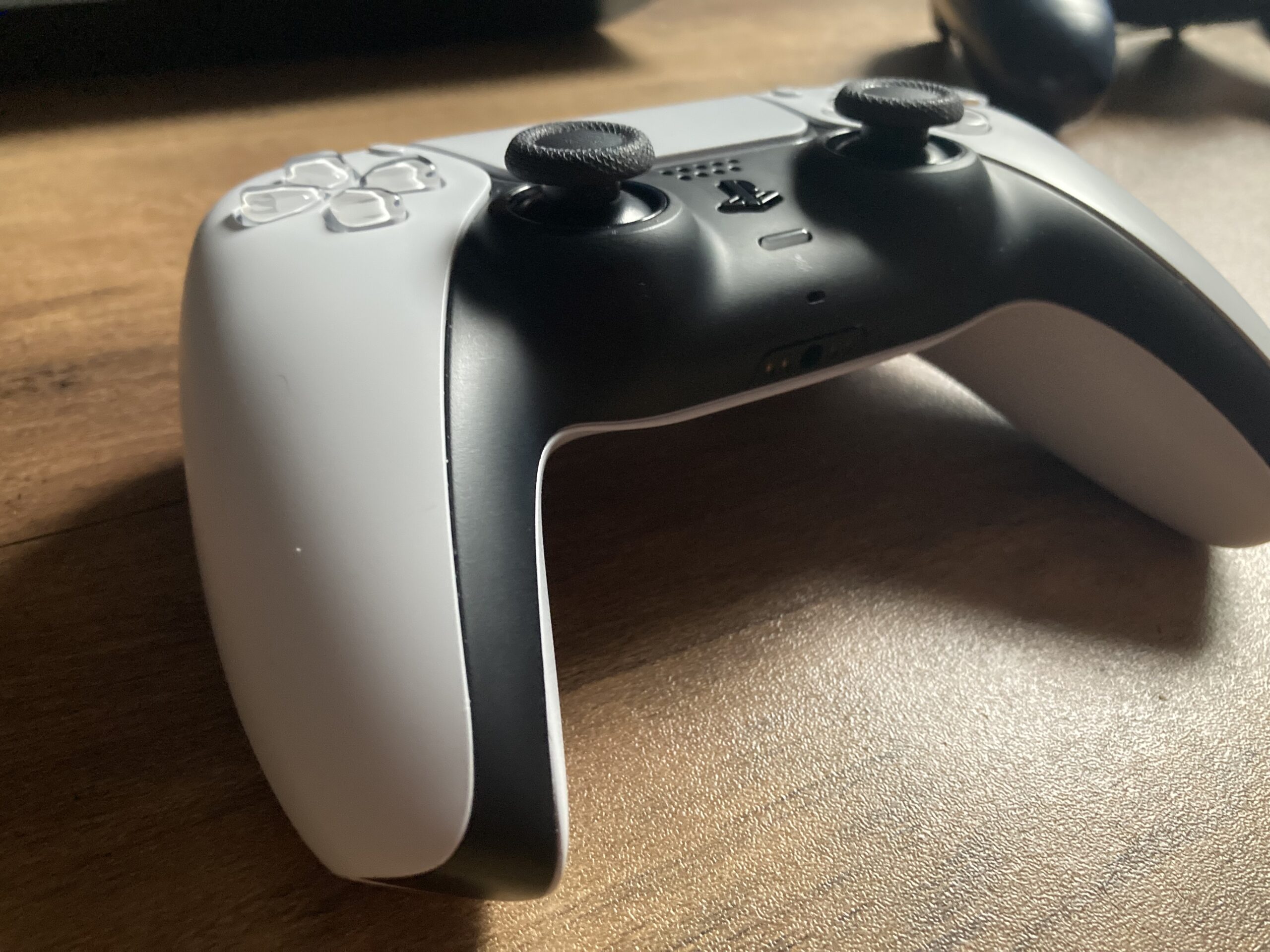
The controller also has touch functionality on the middle plate, which can also be clicked to bring up menus, and interactions. The middle plate recognises gentle actions such as sliding the finger, which provides opportunities for games to incorporate unique features. In Horizon: Forbidden West, the on the screen interface is cleaner and vanishes compared to the original game Horizon: Zero Dawn. Now the simple sliding of the finger momentarily brings up on-screen information. A simple feature that allows games to be cinematic and less obstructed by unnecessary distractions.
Motion control is also another feature of the Playstation 5’s DualSense controller. The built-in gyroscope recognises motion, and some games utilise the feature, one of which is racing in Gran Turismo 7. I personally prefer to use thumbsticks but motion controls is there as an option, and for those with physical disabilities, to have a motion option is something to be applauded.